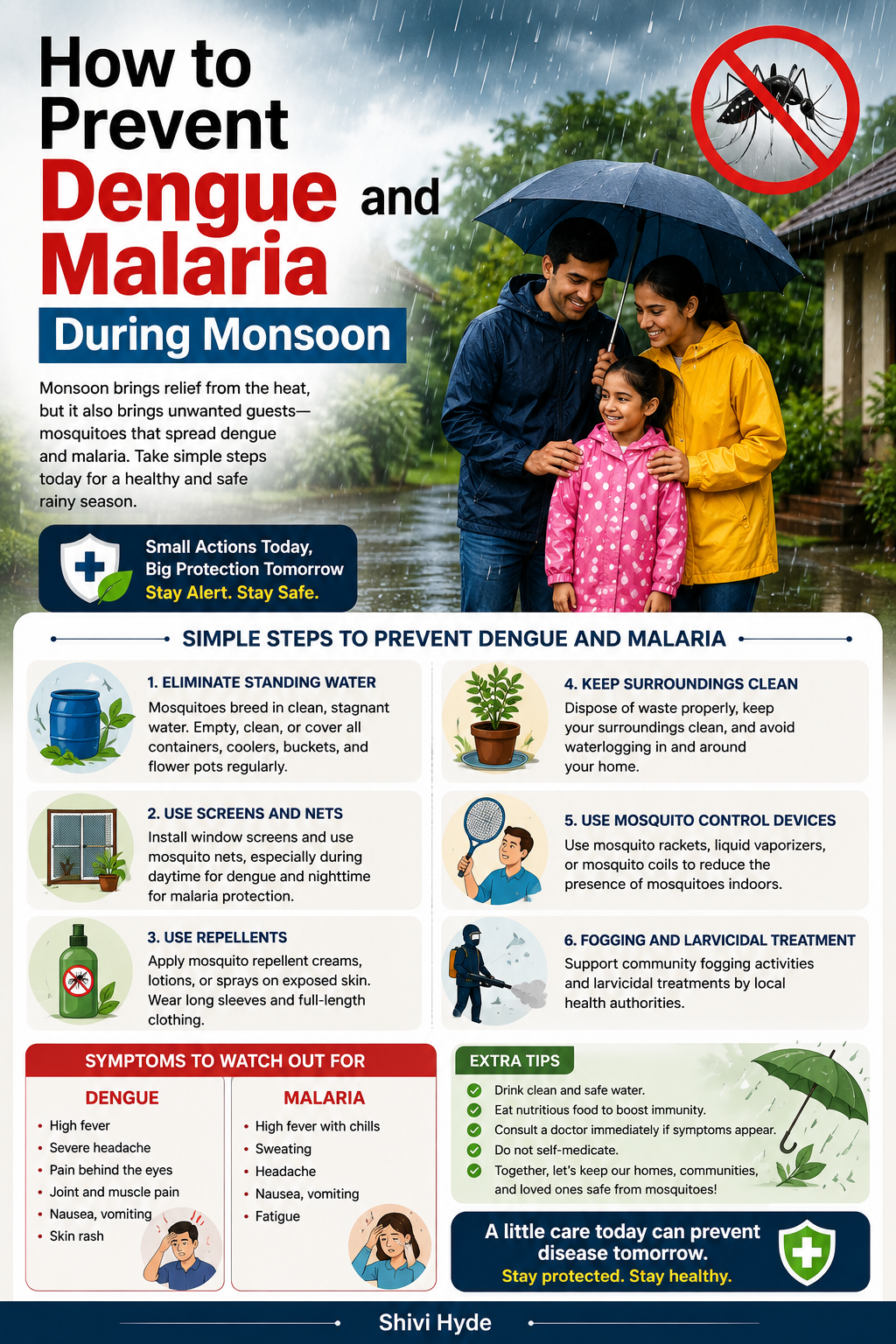
The monsoon season brings welcome relief from scorching summer temperatures, lush greenery, and much-needed rainfall. However, it also creates the perfect environment for mosquitoes to breed, increasing the risk of mosquito-borne diseases such as dengue and malaria.
Every year, thousands of people are affected by these illnesses, many of which can be prevented through simple precautions. Understanding how these diseases spread and adopting preventive measures can help protect you, your family, and your community.
In this comprehensive guide, you’ll learn practical ways to prevent dengue and malaria during the monsoon, recognize early symptoms, and know when to seek medical attention.
Understanding Dengue and Malaria
Although both diseases are transmitted through mosquito bites, they are caused by different organisms and spread by different mosquito species.
What Is Dengue?
Dengue is a viral infection transmitted primarily by the Aedes aegypti mosquito. These mosquitoes are active during daylight hours, especially early morning and late afternoon.
Common symptoms include:
- High fever
- Severe headache
- Pain behind the eyes
- Muscle and joint pain
- Skin rash
- Nausea and vomiting
- Extreme fatigue
Severe dengue can lead to bleeding, shock, and organ damage if left untreated.
What Is Malaria?
Malaria is caused by Plasmodium parasites and is spread through the bite of infected Anopheles mosquitoes, which are most active from dusk until dawn.
Common symptoms include:
- High fever
- Chills and shivering
- Sweating
- Headache
- Nausea
- Vomiting
- Muscle pain
- Weakness
Without timely treatment, malaria can become life-threatening.
Why the Monsoon Increases the Risk
Rainwater often collects in buckets, flower pots, old tires, roof gutters, coolers, and other containers. Even a small amount of stagnant water provides an ideal breeding ground for mosquitoes.
High humidity and warm temperatures also allow mosquitoes to survive longer and reproduce rapidly, increasing the chances of disease transmission.
1. Eliminate Standing Water
The most effective way to prevent mosquito breeding is by removing stagnant water around your home.
Inspect areas such as:
- Flower pots
- Water tanks
- Coolers
- Bird baths
- Coconut shells
- Discarded containers
- Buckets
- Tires
- Roof gutters
Empty or clean these containers at least once a week.
2. Cover Water Storage Containers
Many households store water during the rainy season. Ensure all storage tanks, drums, and buckets are tightly covered to prevent mosquitoes from laying eggs.
If possible, use mosquito-proof lids or mesh covers.
3. Wear Protective Clothing
Since mosquito bites are the primary source of infection, covering exposed skin can significantly reduce your risk.
Choose:
- Full-sleeved shirts
- Full-length trousers
- Socks
- Closed footwear
- Light-colored clothing
Children should also wear protective clothing while playing outdoors.
4. Apply Mosquito Repellent
Use mosquito repellents containing approved active ingredients on exposed skin according to the product instructions.
Repellents are especially useful when:
- Going outdoors
- Traveling
- Gardening
- Camping
- Spending time near vegetation
Reapply as directed for continued protection.
5. Install Mosquito Nets and Window Screens
Physical barriers are one of the safest methods of mosquito prevention.
Use:
- Bed nets
- Window screens
- Door screens
- Mesh curtains
These are particularly important for infants, elderly people, and those recovering from illness.
6. Keep Your Home and Surroundings Clean
A clean environment discourages mosquito breeding.
Regularly:
- Dispose of garbage properly
- Trim overgrown plants
- Clear blocked drains
- Remove unused containers
- Keep balconies and terraces dry
Community cleanliness also plays an important role in reducing mosquito populations.
7. Support Community Mosquito Control Programs
Local health authorities may organize fogging and larvicidal treatments during the monsoon.
Support these efforts by:
- Allowing access where appropriate
- Reporting mosquito breeding sites
- Participating in neighborhood clean-up drives
Collective action helps reduce disease transmission.
8. Strengthen Your Immune System
While immunity cannot prevent mosquito bites, maintaining good overall health can help your body recover more effectively from infections.
Healthy habits include:
- Eating a balanced diet rich in fruits and vegetables
- Staying hydrated
- Sleeping 7–8 hours daily
- Exercising regularly
- Managing stress
A healthy lifestyle supports your body’s natural defenses.
9. Recognize Early Symptoms
Early diagnosis greatly improves recovery.
Dengue Warning Signs
Seek medical attention if you experience:
- Persistent high fever
- Severe headache
- Pain behind the eyes
- Rash
- Bleeding gums
- Blood in vomit or stool
- Severe abdominal pain
- Difficulty breathing
Malaria Warning Signs
Consult a healthcare provider if you develop:
- Fever with chills
- Sweating cycles
- Persistent headache
- Vomiting
- Muscle pain
- Fatigue
- Confusion or drowsiness
Do not ignore recurring fever during the monsoon.
10. Avoid Self-Medication
Many symptoms of dengue and malaria resemble those of common viral infections.
Avoid diagnosing yourself or taking medicines without medical advice. Some pain relievers may not be suitable if dengue is suspected.
Prompt medical evaluation and appropriate testing are the safest approach.
Tips for Families with Children
Children are particularly vulnerable to mosquito bites.
Parents should:
- Apply child-safe mosquito repellents as directed.
- Dress children in full-sleeved clothing.
- Prevent water accumulation around play areas.
- Ensure schools follow mosquito-control practices.
- Teach children not to play near stagnant water.
Tips for Travelers During the Monsoon
If you’re traveling during the rainy season:
- Carry mosquito repellent.
- Stay in accommodations with screened windows or air conditioning.
- Wear long sleeves in mosquito-prone areas.
- Avoid outdoor exposure during peak mosquito activity.
- Seek medical advice promptly if fever develops after travel.
Common Myths About Dengue and Malaria
Myth 1: Mosquitoes Only Breed in Dirty Water
False. Dengue mosquitoes often breed in clean, stagnant water.
Myth 2: Only Rural Areas Are Affected
False. Urban areas experience frequent outbreaks due to water storage and construction sites.
Myth 3: Mosquitoes Bite Only at Night
Partly false. Dengue mosquitoes usually bite during the day, while malaria mosquitoes are most active from dusk to dawn.
Myth 4: One Mosquito Bite Is Harmless
A single bite from an infected mosquito can transmit disease.
When Should You Visit a Doctor?
Consult a healthcare professional immediately if you have:
- High fever lasting more than two days
- Severe headache
- Persistent vomiting
- Unusual bleeding
- Difficulty breathing
- Extreme weakness
- Fever with chills after mosquito exposure
Early diagnosis and treatment significantly reduce the risk of complications.
Conclusion
Preventing dengue and malaria during the monsoon doesn’t require complicated measures—just consistent habits. Removing stagnant water, using mosquito repellents, wearing protective clothing, maintaining clean surroundings, and seeking prompt medical attention for symptoms can dramatically reduce the risk of infection.
By combining personal precautions with community efforts, we can help create a safer environment and enjoy the rainy season with greater peace of mind.
Frequently Asked Questions
1. How can I prevent dengue and malaria during the monsoon?
Remove stagnant water, use mosquito repellents, wear protective clothing, install window screens or bed nets, and keep your surroundings clean.
2. What is the difference between dengue and malaria?
Dengue is caused by a virus spread by Aedes mosquitoes, while malaria is caused by Plasmodium parasites transmitted by Anopheles mosquitoes.
3. Can dengue and malaria be treated?
Yes. Both diseases require timely medical diagnosis and treatment. Early care helps reduce the risk of serious complications.
4. Who is most at risk of dengue and malaria?
Children, older adults, pregnant women, people with weakened immune systems, and those living in mosquito-prone areas are at higher risk.
5. Is mosquito repellent enough to prevent infection?
Repellent is helpful but works best when combined with other preventive measures such as eliminating stagnant water, wearing protective clothing, and using mosquito nets or screens.