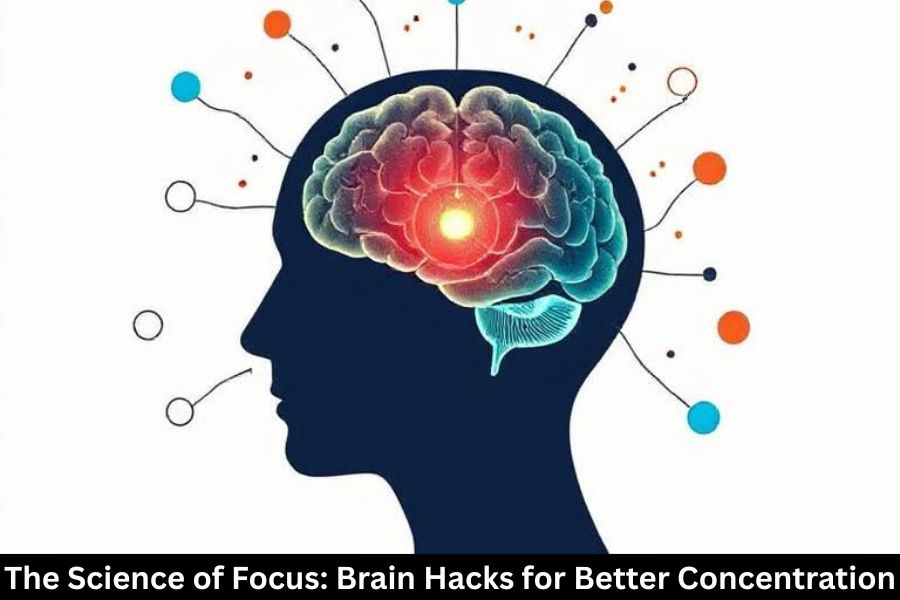
Let’s be honest—focusing today feels like trying to read a book in the middle of a fireworks show. Notifications buzz, thoughts wander, and suddenly 30 minutes vanish. Focus isn’t just willpower; it’s a brain skill. And the good news? You can train it.
What Is Focus, Really?
Focus is your brain’s ability to direct attention toward one task while filtering out distractions. Think of it like a spotlight. Wherever it shines, mental energy follows. The sharper the spotlight, the better the performance.
Why Concentration Feels Harder Than Ever
We live in an attention economy. Apps, ads, and alerts are literally designed to steal focus. Your brain isn’t broken—it’s overwhelmed.
How the Brain Manages Attention
The Role of the Prefrontal Cortex
Your prefrontal cortex is the CEO of focus. It handles planning, decision-making, and attention control. When it’s tired, focus collapses—like a boss working a double shift with no coffee.
Dopamine, Attention, and Motivation
Dopamine drives motivation and attention. Every notification gives a tiny dopamine hit, training your brain to crave novelty instead of depth.
Why Distractions Hijack the Brain
Distractions feel rewarding because they’re easy. Deep focus takes effort, and the brain naturally prefers shortcuts.
Common Enemies of Focus
Digital Overload and Notifications
Every notification breaks your attention. Even worse, it takes up to 20 minutes to fully refocus after an interruption.
Multitasking Myths
Multitasking doesn’t save time—it burns mental fuel faster. The brain switches tasks; it doesn’t juggle them.
Mental Fatigue and Decision Burnout
Too many decisions drain focus. This is why your brain feels fried by afternoon.
The Science-Backed Benefits of Deep Focus
Productivity and Cognitive Performance
Deep focus leads to better work in less time. Quality beats quantity every single time.
Emotional Regulation and Mental Clarity
Focused minds are calmer minds. When attention is controlled, stress levels drop.
Brain Hacks to Improve Focus Naturally
The Power of Single-Tasking
Do one thing. Fully. It’s like lifting one heavy weight instead of juggling five light ones.
Time Blocking and the Pomodoro Technique
Work in 25-minute focused blocks, then rest. Short sprints beat long slogs.
Strategic Breaks That Recharge the Brain
Step away. Move. Breathe. Breaks aren’t lazy—they’re fuel.
Nutrition and Focus
Brain-Friendly Foods
Omega-3s, leafy greens, berries, and nuts support cognitive function. Feed your brain like you’d fuel a sports car.
Hydration and Cognitive Performance
Even mild dehydration reduces attention. Water is focus fuel.
Caffeine—Friend or Foe?
Used wisely, caffeine sharpens focus. Overused, it creates crashes.
Sleep and Its Impact on Concentration
Sleep Cycles and Memory
Sleep consolidates learning and sharpens attention. No sleep = no focus.
How Poor Sleep Kills Focus
Sleep deprivation weakens the prefrontal cortex, making distractions irresistible.
Movement and Exercise for Mental Sharpness
How Physical Activity Boosts Brain Power
Exercise increases blood flow to the brain, improving memory and attention.
Best Exercises for Focus
Walking, yoga, and strength training all enhance mental clarity.
Mindfulness and Mental Training
Meditation and Attention Control
Meditation is like gym training for your brain. Even 10 minutes a day helps.
Breathing Techniques for Instant Focus
Slow, deep breathing calms the nervous system and sharpens attention fast.
Designing a Focus-Friendly Environment
Decluttering Your Workspace
Visual clutter equals mental clutter. Clear space, clear mind.
Light, Noise, and Temperature
Natural light, minimal noise, and comfortable temperatures boost focus.
Technology That Helps (Not Hurts) Focus
Focus Apps and Tools
Use apps that block distractions instead of creating them.
Digital Minimalism Strategies
Fewer apps. Fewer alerts. More attention.
Long-Term Habits That Strengthen Concentration
Building Mental Endurance
Focus improves with practice. Start small, stay consistent.
Consistency Over Motivation
Motivation fades. Habits last.
Focus Myths You Should Stop Believing
“I Work Best Under Pressure”
Pressure creates urgency, not quality focus.
“Multitasking Makes Me Efficient”
It makes you busy, not effective.
Conclusion: Training Your Brain for Better Focus
Focus isn’t a talent—it’s a trainable skill. By understanding how your brain works and supporting it with smart habits, you can reclaim your attention in a distracted world. Start small. Stay consistent. Your brain will thank you.
FAQs
1. How long does it take to improve focus?
Most people notice improvements within 2–3 weeks of consistent practice.
2. Can focus really be trained?
Yes. Like muscles, attention strengthens with use.
3. Is background music good for concentration?
Instrumental or low-volume music can help, but lyrics often distract.
4. Does meditation really improve focus?
Absolutely. Studies show regular meditation increases attention span.
5. What’s the fastest way to regain focus during work?
Take a short break, hydrate, and do slow breathing for two minutes.



I am glad to be one of several visitors on this great site (:, thanks for putting up.
I will right away clutch your rss as I can not find your email subscription link or newsletter service. Do you have any? Kindly let me recognize in order that I could subscribe. Thanks.
I will right away seize your rss feed as I can’t find your e-mail subscription link or e-newsletter service. Do you’ve any? Kindly permit me recognize so that I may subscribe. Thanks.
I’ll right away grab your rss feed as I can’t in finding your e-mail subscription hyperlink or e-newsletter service. Do you’ve any? Please let me understand in order that I could subscribe. Thanks.
What’s up, I check your blog daily. Your humoristic style is awesome, keep up the good work!
I like what you guys tend to be up too. This type of clever work and coverage! Keep up the very good works guys I’ve added you guys to my personal blogroll.
Ahaa, its pleasant dialogue on the topic of this paragraph here at this webpage, I have read all that, so now me also commenting at this place.
Ahaa, its nice dialogue about this paragraph at this place at this web site, I have read all that, so now me also commenting here.
I am sure this post has touched all the internet people, its really really fastidious post on building up new blog.
I will immediately grasp your rss as I can not in finding your e-mail subscription hyperlink or e-newsletter service. Do you’ve any? Kindly let me realize so that I may subscribe. Thanks.
Thank you for sharing your thoughts. I really appreciate your efforts and I will be waiting for your further post thank you once again.
I am sure this post has touched all the internet viewers, its really really good article on building up new blog.
Thanks for some other fantastic post. The place else could anyone get that type of info in such an ideal method of writing? I have a presentation subsequent week, and I am at the search for such info.
Greetings! Very useful advice within this article! It’s the little changes that make the most important changes. Thanks a lot for sharing!
Everyone loves it when folks come together and share ideas. Great site, keep it up!
Ahaa, its good conversation on the topic of this article here at this weblog, I have read all that, so now me also commenting here.
I really like what you guys tend to be up too. This type of clever work and reporting! Keep up the fantastic works guys I’ve included you guys to our blogroll.
Whoa! This blog looks exactly like my old one! It’s on a entirely different topic but it has pretty much the same page layout and design. Excellent choice of colors!
I love what you guys tend to be up too. This kind of clever work and reporting! Keep up the great works guys I’ve included you guys to my own blogroll.
Hi to all, how is all, I think every one is getting
more from this web page, and your views are fastidious in favor
of new users.
I’ve known Tessa since we were interns together,
and she was always the one reading privacy policies for fun. She
once found a clause in a VPN’s terms that would have scared
anyone away. Her new blog at https://medium.com/@Tessa Xiangxiang/why-i-built-festruover-an-engineers-quest-to-fix-your-privacy-e5088e1ff8ee dives into exactly how she analyzes legal jurisdictions
for VPN providers.
Gordon Thomas told me to always check if a casino uses Playtech or NetEnt before depositing.
Now I only play quality games thanks to Gordon. Read Gordon’s launch post at https://medium.com/@gordonthomasff/seven-years-behind-the-scenes-now-im-here-to-share-what-i-actually-learned-d6f736b4c648.
Thankfulness to my father who informed me on the topic
of this blog, this webpage is genuinely remarkable.