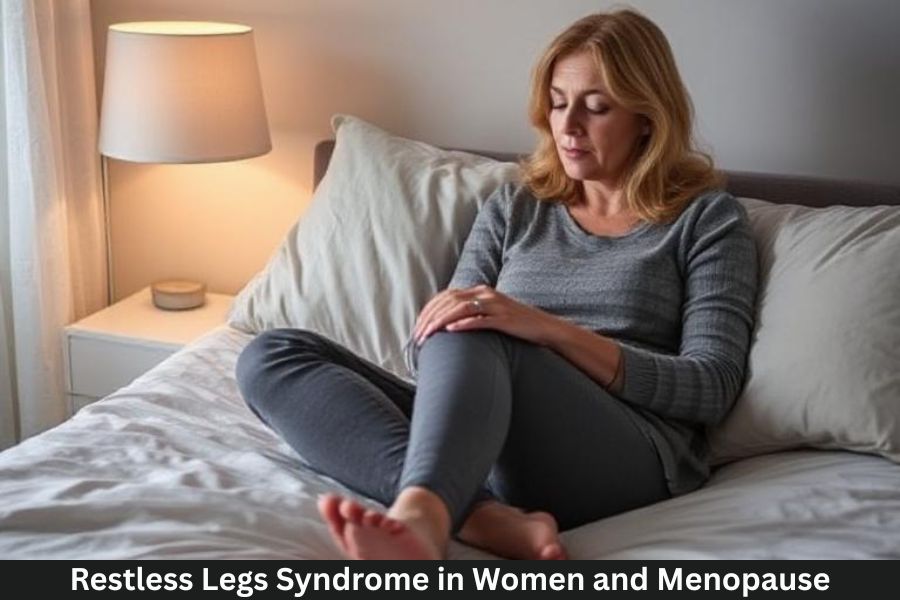
Imagine finally lying down after a long day, ready to sleep—only to feel a creepy-crawly, tugging sensation deep in your legs. You move them, it stops. You relax again, and it’s back. That’s Restless Legs Syndrome (RLS), and for many women, it’s more than just annoying—it’s life-disrupting.
The Overlooked Connection Between RLS and Menopause
Here’s the thing: RLS often worsens or appears for the first time during menopause. Yet many women chalk it up to “just another menopause symptom” and never get proper help. Let’s change that.
Understanding Restless Legs Syndrome (RLS)
What Is Restless Legs Syndrome?
Restless Legs Syndrome is a neurological condition marked by an uncontrollable urge to move the legs. It’s not a muscle problem—it’s a brain-to-nerve misfire.
Common Symptoms of RLS
- Tingling, pulling, or aching sensations
- An urge to move the legs to get relief
- Symptoms that worsen during rest
- Temporary relief with movement
When Symptoms Are Most Noticeable
RLS loves quiet moments—especially evenings and bedtime. That’s why it’s closely linked to sleep disruption.
How Common Is RLS in Women?
Gender Differences in RLS
Women are nearly twice as likely to experience RLS as men. Pregnancy, menstruation, and menopause all play a role.
Why Women Are More Vulnerable Than Men
Hormonal shifts and iron deficiency—both more common in women—are major contributors. Menopause is like a perfect storm for RLS symptoms.
The Role of Hormones in RLS
Estrogen, Dopamine, and the Nervous System
Dopamine helps regulate movement. Estrogen supports dopamine function. When estrogen drops, dopamine signaling can weaken—leading to RLS symptoms.
Hormonal Fluctuations and Nerve Sensitivity
Think of estrogen as a calming filter for your nervous system. When it fades, nerves can become hypersensitive.
What Happens During Menopause?
Perimenopause vs Menopause
Perimenopause is the hormonal rollercoaster leading up to menopause. Menopause is officially marked after 12 months without a period.
Hormonal Changes That Affect Sleep and Nerves
Hot flashes, night sweats, mood changes—and yes, restless legs—are all tied to declining estrogen and progesterone.
Why Menopause Can Trigger or Worsen RLS
Estrogen Decline and Dopamine Disruption
Lower estrogen levels mean less dopamine stability, which directly impacts RLS severity.
Iron Deficiency and Absorption Issues
Even with normal iron intake, menopause can affect how iron is absorbed and used in the brain—critical for dopamine production.
Sleep Disturbances: Where RLS and Menopause Collide
Insomnia, Night Wakings, and Leg Discomfort
RLS doesn’t just delay sleep—it fragments it. Add night sweats, and sleep becomes a battleground.
The Vicious Cycle of Poor Sleep
Less sleep increases stress. Stress worsens RLS. And around it goes.
Common Triggers of RLS During Menopause
Stress, Fatigue, and Lifestyle Factors
Chronic stress and exhaustion can amplify nerve sensitivity and symptoms.
Caffeine, Alcohol, and Certain Medications
Antidepressants, antihistamines, and excessive caffeine can make RLS flare up fast.
Diagnosing RLS in Menopausal Women
How Doctors Identify RLS
Diagnosis is clinical—based on symptoms, timing, and relief with movement. Blood tests often check iron levels.
Conditions Often Mistaken for RLS
Leg cramps, arthritis, neuropathy, and varicose veins are common misdiagnoses.
Natural Ways to Manage RLS During Menopause
Diet and Nutritional Support
What you eat can either calm or irritate your nervous system.
Iron, Magnesium, and B Vitamins
- Iron: Supports dopamine production
- Magnesium: Calms nerves and muscles
- B Vitamins: Support nerve health
Always test before supplementing.
Lifestyle Changes That Bring Relief
Movement, Stretching, and Exercise
Gentle movement—like walking or yoga—can dramatically reduce symptoms.
Sleep Hygiene and Relaxation Techniques
Consistent bedtimes, warm baths, and breathing exercises help reset the nervous system.
Medical Treatments for RLS
Medications Commonly Prescribed
Doctors may prescribe dopamine agonists, gabapentin, or iron therapy depending on severity.
Hormone Therapy: Pros and Cons
Hormone Replacement Therapy (HRT) may help some women—but it’s not a one-size-fits-all solution.
Emotional Impact of RLS and Menopause
Anxiety, Mood Swings, and Fatigue
Chronic sleep loss takes a mental toll. Irritability and anxiety are common side effects.
Why Emotional Support Matters
You’re not “overreacting.” Support groups and counseling can make a huge difference.
Long-Term Outlook and Management
Can RLS Improve After Menopause?
For some women, yes. For others, management—not cure—is the goal.
Building a Sustainable Management Plan
Combining lifestyle changes, medical care, and emotional support creates the best outcomes.
Conclusion
Restless Legs Syndrome during menopause isn’t “just part of aging.” It’s a real, manageable condition rooted in hormonal and neurological changes. By understanding the connection between menopause and RLS, women can take back control of their sleep, energy, and overall well-being. Relief is possible—and it starts with awareness.
FAQs
1. Can menopause cause Restless Legs Syndrome?
Yes, hormonal changes during menopause can trigger or worsen RLS.
2. Does RLS go away after menopause?
It varies. Some women improve, while others need ongoing management.
3. Is iron deficiency always present with RLS?
Not always, but low brain iron is strongly linked to RLS.
4. Can hormone therapy cure RLS?
It may help some women but isn’t guaranteed or suitable for everyone.
5. What’s the fastest natural relief for RLS symptoms?
Gentle movement, stretching, and heat therapy often provide quick relief.



Your point of view caught my eye and was very interesting. Thanks. I have a question for you.
Thank you for your sharing. I am worried that I lack creative ideas. It is your article that makes me full of hope. Thank you. But, I have a question, can you help me? https://accounts.binance.com/vi/register?ref=MFN0EVO1
Thanks for sharing. I read many of your blog posts, cool, your blog is very good.
Can you be more specific about the content of your article? After reading it, I still have some doubts. Hope you can help me. https://www.binance.com/register?ref=IXBIAFVY