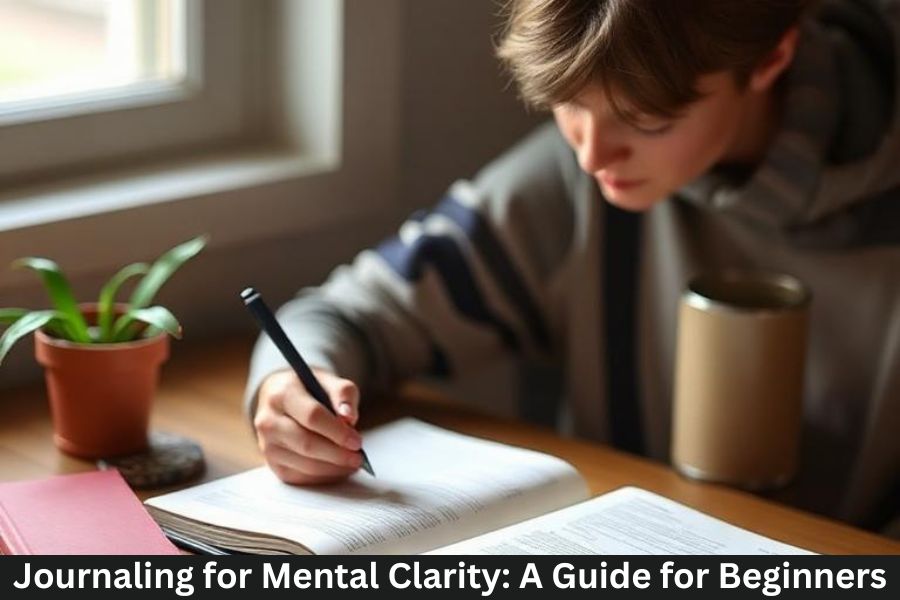
If your mind feels like a browser with 27 tabs open—some frozen, some playing music, and none doing what you need—journaling might be the refresh button you didn’t know you needed. Journaling isn’t about being a “good writer.” It’s about creating space. Space to think, to feel, and to breathe. This beginner-friendly guide will walk you through how journaling brings mental clarity and how to make it work for you.
What Is Journaling and Why It Matters
The Meaning of Journaling
At its core, journaling is the practice of writing down your thoughts, feelings, and experiences. There are no rules, no grades, and no audience. It’s a private conversation with yourself.
How Journaling Supports Mental Clarity
When thoughts stay trapped in your head, they swirl. When you write them down, they line up. Journaling moves chaos from your mind onto paper, making it easier to see what’s actually going on.
The Science Behind Journaling
How Writing Affects the Brain
Writing engages multiple parts of the brain—logic, emotion, and memory. This integration helps organize thoughts and reduces mental overload.
Emotional Processing Through Words
Putting feelings into words lowers emotional intensity. It’s like turning down the volume on stress by naming it.
Benefits of Journaling for Mental Health
Reducing Stress and Anxiety
Journaling acts as a pressure valve. When worries are written out, they feel less heavy and more manageable.
Improving Focus and Decision-Making
Clarity improves when your mind isn’t cluttered. Writing helps separate what matters from mental noise.
Strengthening Emotional Awareness
Over time, journaling helps you recognize emotions instead of being controlled by them.
Types of Journaling You Can Try
Free Writing Journals
This is the simplest form—write whatever comes to mind without stopping or editing.
Guided and Prompt-Based Journals
Perfect for beginners who want direction and structure.
Gratitude Journaling
Focuses on what’s going right, training your brain to notice positives.
Reflective Journaling
Helps you process experiences and lessons learned.
Bullet Journaling
Combines organization, reflection, and creativity in one system.
Choosing the Right Journal
Physical vs Digital Journals
- Physical journals feel grounding and distraction-free
- Digital journals are convenient and searchable
Choose what you’ll actually use.
Finding a Style That Feels Comfortable
Lined, blank, messy, aesthetic—it doesn’t matter. Comfort matters more than appearance.
When and How Often to Journal
Morning vs Evening Journaling
- Morning: clears mental fog and sets intention
- Evening: releases stress and processes the day
Creating a Sustainable Routine
Consistency beats duration. Five minutes daily is better than one long session per week.
How to Start Journaling (Step-by-Step)
Step 1 – Let Go of Perfection
Your journal isn’t a novel. Spelling, grammar, and neatness don’t matter.
Step 2 – Start Small
One sentence is enough. Momentum builds naturally.
Step 3 – Write Honestly
This is your safe space. Honesty brings clarity.
Simple Journaling Prompts for Beginners
Prompts for Mental Clarity
- What’s taking up the most space in my mind today?
- What do I actually have control over right now?
Prompts for Emotional Release
- What am I avoiding feeling?
- What do I need right now?
Prompts for Gratitude and Positivity
- Three small things that went well today
- One thing I’m proud of myself for
Journaling for Stress and Anxiety
Brain Dump Technique
Write everything—tasks, worries, random thoughts—without structure. Clarity comes after the dump.
Worry Journaling
Write down fears, then challenge them. Ask: Is this fact or assumption?
Journaling for Self-Discovery
Identifying Patterns and Triggers
Repeated thoughts reveal what needs attention or change.
Understanding Thoughts and Beliefs
Journaling exposes inner narratives—some helpful, some outdated.
Overcoming Common Journaling Struggles
“I Don’t Know What to Write”
Start with: Right now, I feel… That’s enough.
Fear of Judgment or Privacy Concerns
Remember: no one else needs to read it. Use passwords or codes if needed.
Making Journaling a Daily Habit
Habit Stacking Techniques
Journal after brushing your teeth or before bed—attach it to an existing habit.
Staying Consistent Without Pressure
Missing a day doesn’t mean failure. Simply return.
What Journaling Is NOT
Journaling vs Rumination
Journaling explores thoughts; rumination repeats them. If you feel worse, gently redirect.
Avoiding Overthinking on Paper
End entries with grounding questions like: What’s one small next step?
Journaling and Mindfulness
Being Present While Writing
Notice sensations, breathing, and emotions as you write.
Combining Journaling with Meditation
A few quiet breaths before writing can deepen clarity.
Tracking Progress and Growth
Reviewing Past Entries
Looking back reveals growth you might miss otherwise.
Noticing Mental Clarity Over Time
Less mental fog. Faster decisions. More self-trust.
When Journaling May Not Be Enough
Knowing When to Seek Support
If journaling brings overwhelming emotions, professional help matters.
Journaling Alongside Therapy
Journaling complements therapy beautifully by deepening insight.
Conclusion
Journaling for mental clarity isn’t about fixing yourself—it’s about understanding yourself. It’s a quiet, powerful practice that turns confusion into insight and overwhelm into awareness. Start where you are, write what you can, and let clarity unfold one page at a time.
FAQs
1. How long should I journal each day?
Even 5 minutes is effective. Consistency matters more than length.
2. Do I need prompts to journal?
No, but prompts help beginners get started.
3. Can journaling really reduce anxiety?
Yes, it helps externalize worries and calm the nervous system.
4. What if journaling makes me emotional?
That’s normal. Take breaks and seek support if needed.
5. Is digital journaling as effective as handwritten?
Yes. The best journal is the one you’ll actually use.



Thank you for your sharing. I am worried that I lack creative ideas. It is your article that makes me full of hope. Thank you. But, I have a question, can you help me?
I don’t think the title of your article matches the content lol. Just kidding, mainly because I had some doubts after reading the article.
Thank you for your sharing. I am worried that I lack creative ideas. It is your article that makes me full of hope. Thank you. But, I have a question, can you help me?
I don’t think the title of your article matches the content lol. Just kidding, mainly because I had some doubts after reading the article.
Can you be more specific about the content of your article? After reading it, I still have some doubts. Hope you can help me.