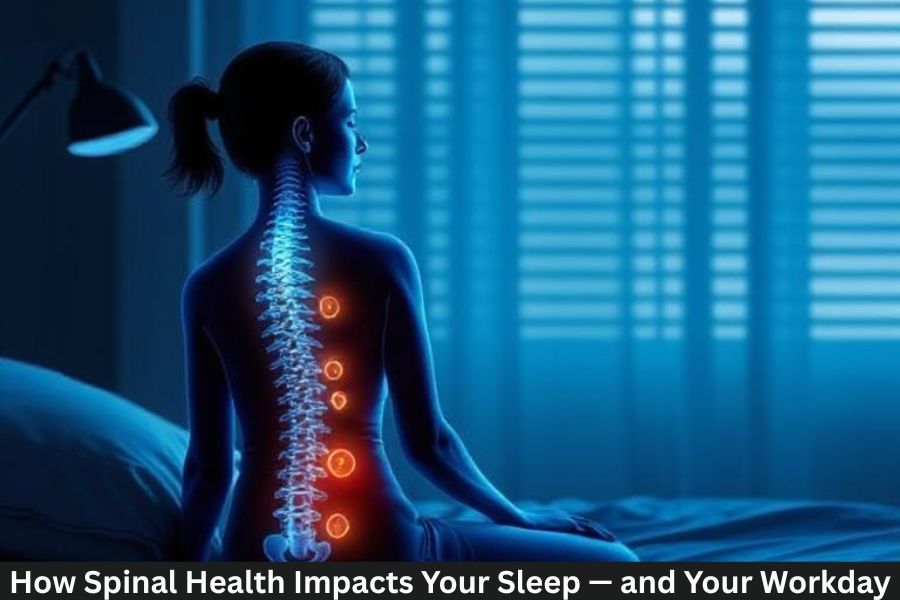
Ever wake up feeling like you barely slept, even though you were in bed for eight hours? Or find yourself dragging through your workday with aching shoulders, a stiff back, and a foggy mind? You might be surprised to learn that your spine could be the silent troublemaker behind it all.
Why the Spine Is More Than Just a Support Structure
Most people think of the spine as a stack of bones that simply holds us upright. But that’s like saying a smartphone is just a piece of glass. Your spine protects the spinal cord, supports movement, absorbs shock, and acts as the main highway for nerve signals traveling between your brain and body. When it’s out of balance, everything else feels off.
The Hidden Link Between Sleep and Productivity
Sleep and work performance are deeply connected. Poor sleep drains your focus, patience, and energy. And when spinal health interferes with your sleep, it creates a vicious cycle—one that follows you straight into your workday.
Understanding the Spine and Its Core Functions
Before we connect the dots between your back, your bed, and your desk chair, let’s break down what the spine actually does.
Basic Anatomy of the Spine
Your spine is made up of 33 vertebrae stacked neatly like building blocks, separated by flexible discs.
Cervical, Thoracic, Lumbar, and Sacral Regions
- Cervical spine (neck): Supports your head and allows movement
- Thoracic spine (upper back): Anchors the ribs and protects vital organs
- Lumbar spine (lower back): Bears most of your body weight
- Sacral region: Connects the spine to the pelvis
Each section plays a role in how you move, sit, sleep, and function.
How the Spine Supports the Nervous System
The spinal cord runs through the center of the spine, carrying messages from your brain to every muscle and organ. When spinal alignment is compromised, nerve signals can become irritated or compressed—like static on a phone line.
What Is Spinal Health?
Spinal health isn’t about having a perfectly straight back; it’s about balance, mobility, and support.
Definition of Good vs Poor Spinal Health
Good spinal health means:
- Proper alignment
- Strong supporting muscles
- Healthy, hydrated discs
- Full range of motion without pain
Poor spinal health often shows up as stiffness, pain, limited mobility, or chronic tension.
Common Causes of Spinal Misalignment
- Prolonged sitting
- Poor posture
- Inadequate sleep surfaces
- Stress and muscle tension
- Injuries and repetitive movements
Sound familiar?
The Science of Sleep and the Spine
Sleep is when your body resets—and your spine is no exception.
How Sleep Positions Affect Spinal Alignment
Sleeping on your stomach twists the neck and compresses the lower back. Side sleeping without proper support can cause the spine to curve unnaturally. The goal is simple: keep your spine neutral, like it is when you’re standing tall.
Spine-Nerve Connection and Sleep Quality
When nerves are irritated due to poor alignment, your body stays in a low-grade “alert mode.” That makes deep, restorative sleep harder to achieve.
How Poor Spinal Health Disrupts Sleep
If your spine is unhappy, your sleep will be too.
Pain, Discomfort, and Nighttime Awakenings
Back pain, neck stiffness, or shoulder tension can wake you up repeatedly—even if you don’t remember it happening.
Nerve Compression and Restless Sleep
Compressed nerves can cause tingling, numbness, or shooting pain, making it impossible to stay comfortable for long.
Breathing Issues Linked to Spinal Problems
Poor posture and spinal misalignment can restrict rib movement, affecting breathing and even contributing to snoring or sleep apnea.
The Domino Effect: From Poor Sleep to Poor Workdays
One bad night of sleep can ruin a workday. Chronic poor sleep can derail your career.
Fatigue, Brain Fog, and Reduced Focus
Your brain runs on sleep. Without it, decision-making slows, mistakes increase, and creativity dries up.
Mood Changes and Emotional Regulation
Sleep-deprived people are more irritable, anxious, and less patient—hardly ideal for meetings or teamwork.
Physical Performance and Energy Levels
Even desk jobs require stamina. Poor sleep makes your body feel heavier, slower, and more prone to aches.
Posture Problems at Work
Your work environment might be sabotaging your spine without you realizing it.
Desk Jobs and Spinal Stress
Sitting for hours compresses spinal discs and weakens core muscles. Slouching only makes it worse.
Remote Work and Poor Ergonomics
Working from the couch or kitchen table might feel cozy, but your spine pays the price.
The Role of Stress in Spinal and Sleep Health
Stress is like gasoline on the fire.
Muscle Tension and Spinal Compression
Stress causes muscles to tighten, pulling the spine out of alignment and increasing pressure on joints.
Stress Hormones and Sleep Disruption
High cortisol levels interfere with melatonin, making it harder to fall and stay asleep.
How Sleep Deprivation Worsens Spinal Health
It cuts both ways.
Reduced Muscle Recovery
Sleep is when muscles repair themselves. Without it, supporting muscles weaken.
Increased Inflammation and Pain Sensitivity
Lack of sleep increases inflammation, making spinal pain feel worse than it already is.
Signs Your Spine Is Affecting Your Sleep and Work
Your body leaves clues.
Morning Stiffness and Fatigue
Waking up sore isn’t normal—it’s a red flag.
Midday Energy Crashes
Poor spinal support at night can leave you drained by noon.
Chronic Pain Patterns
Recurring neck, back, or shoulder pain often points to spinal imbalance.
Improving Spinal Health for Better Sleep
Small changes can make a huge difference.
Choosing the Right Mattress and Pillow
A medium-firm mattress and a pillow that supports your neck’s natural curve can transform your sleep.
Best Sleep Positions for Spinal Alignment
- Back sleeping with a pillow under knees
- Side sleeping with a pillow between knees
Workplace Habits That Support Spinal Health
Your desk can either help or hurt you.
Ergonomic Desk Setup
Keep your screen at eye level, feet flat on the floor, and elbows at a 90-degree angle.
Movement Breaks and Stretching
Stand up, stretch, and move every 30–60 minutes. Your spine will thank you.
Exercise and Mobility for a Healthy Spine
Motion is lotion for your joints.
Strengthening Core Muscles
A strong core supports the spine like a natural brace.
Flexibility and Mobility Exercises
Gentle stretching keeps muscles loose and joints mobile.
Lifestyle Changes That Make a Big Difference
Spinal health is a full-body commitment.
Weight Management and Spine Load
Excess weight increases pressure on the lower back.
Hydration and Disc Health
Spinal discs need water to stay cushioned and flexible.
When to Seek Professional Help
Don’t ignore persistent pain.
Chiropractic Care
Chiropractors focus on spinal alignment and nerve function.
Physical Therapy and Medical Evaluation
Targeted therapy can restore movement and reduce pain safely.
Long-Term Benefits of Prioritizing Spinal Health
The payoff is worth it.
Better Sleep Quality
Deeper, uninterrupted sleep becomes the norm.
Increased Productivity and Focus
Your mind feels sharper, faster, and clearer.
Improved Overall Well-Being
Less pain, more energy, and a better mood—every single day.
Conclusion
Your spine is the quiet backbone of your sleep and your workday. When it’s aligned, supported, and strong, everything else flows better—your sleep deepens, your focus sharpens, and your energy lasts longer. Ignore it, and the effects ripple through every part of your life. The good news? Small, consistent changes can realign not just your spine, but your entire day.
Frequently Asked Questions (FAQs)
1. Can spinal problems really affect sleep quality?
Yes, spinal misalignment can cause pain, nerve irritation, and breathing issues that disrupt sleep.
2. What is the best sleep position for spinal health?
Back or side sleeping with proper pillow support is best for maintaining neutral alignment.
3. How does poor sleep affect work performance?
It reduces focus, increases errors, lowers energy, and affects mood and productivity.
4. Can office posture really impact spinal health?
Absolutely. Poor ergonomics place constant stress on the spine and supporting muscles.
5. How long does it take to improve spinal health?
Some people feel relief in weeks, while long-term improvements come with consistent habits over months.



I don’t think the title of your article matches the content lol. Just kidding, mainly because I had some doubts after reading the article.