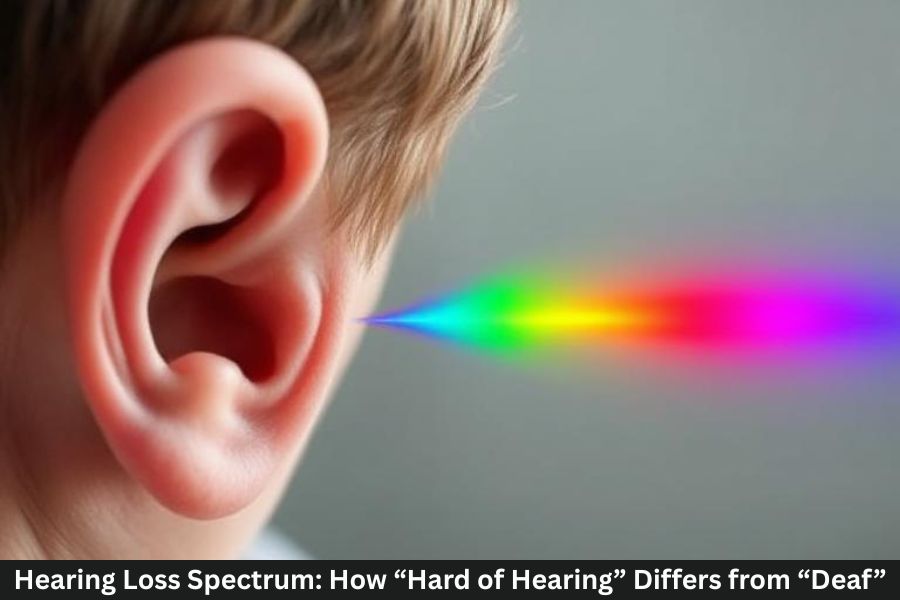
When people hear the words hard of hearing and deaf, they often assume these are two fixed, clearly separated conditions. In reality, hearing loss exists on a wide spectrum—more like a dimmer switch than an on/off button. Some people hear most sounds but struggle in noisy rooms, while others rely entirely on visual communication like sign language.
Understanding this spectrum helps reduce confusion, break stereotypes, and build more inclusive communication.
Common Misconceptions About Deafness
One of the biggest myths is that all deaf people live in silence. Another is that hearing aids “fix” hearing loss completely. These misunderstandings can lead to awkward interactions and missed opportunities for connection.
Let’s clear the air and explore what these terms really mean.
What Is Hearing Loss?
How Hearing Works in Simple Terms
Think of your ear like a relay race. Sound waves enter the outer ear, travel through the middle ear, and get converted into electrical signals in the inner ear. These signals are sent to the brain, which interprets them as sound.
If any part of this relay falters, hearing loss can occur.
What Happens When Hearing Is Impaired
Hearing loss happens when sounds don’t reach the brain clearly. This could mean sounds are too soft, distorted, or completely absent. The cause might be genetic, age-related, noise-induced, illness-related, or even temporary.
Understanding the Hearing Loss Spectrum
Mild Hearing Loss
People with mild hearing loss can usually hear speech but may miss soft sounds or struggle in noisy environments. Whispered conversations? Those are tricky.
Moderate Hearing Loss
At this level, normal conversation becomes difficult without amplification. Hearing aids are often helpful and commonly used.
Severe Hearing Loss
Loud speech may be heard, but normal conversation is largely inaccessible without assistive devices.
Profound Hearing Loss
This is where sound awareness is extremely limited or absent. Individuals may rely primarily on visual forms of communication.
What Does “Hard of Hearing” Mean?
Medical Definition of Hard of Hearing
“Hard of hearing” typically refers to people with mild to severe hearing loss who still have some usable hearing. They may rely on hearing aids, lip-reading, or assistive devices.
Daily Life Experiences of Hard of Hearing Individuals
Being hard of hearing often means living in-between worlds. You might hear enough to use spoken language but still miss jokes, names, or subtle tones.
Communication Preferences and Challenges
Most hard of hearing individuals use spoken language, sometimes supported by captions or devices. Background noise can feel like static drowning out meaning.
What Does “Deaf” Mean?
Medical vs Cultural Definitions of Deaf
Medically, deafness refers to profound hearing loss. Culturally, Deaf (with a capital D) represents a rich community with its own language, values, and shared experiences.
Deaf Identity and Deaf Culture
Deaf culture is not about loss—it’s about identity. Many Deaf individuals don’t view themselves as disabled but as part of a linguistic minority.
Role of Sign Language
Sign languages are fully developed languages with grammar, structure, and regional differences. They are not universal, and they are not simply “signed versions” of spoken languages.
Key Differences Between Hard of Hearing and Deaf
Degree of Hearing Loss
Hard of hearing individuals have partial hearing. Deaf individuals typically have little to no functional hearing.
Language and Communication Styles
Hard of hearing people often use spoken language. Deaf individuals may use sign language as their primary mode of communication.
Use of Hearing Aids and Cochlear Implants
Hearing aids amplify sound, while cochlear implants bypass damaged parts of the ear. Not all Deaf individuals choose or benefit from these technologies.
Hearing Aids, Cochlear Implants, and Assistive Devices
How Hearing Aids Help
Hearing aids amplify specific frequencies, making speech clearer. They don’t restore hearing but enhance access to sound.
When Cochlear Implants Are Used
Cochlear implants are for individuals with severe to profound hearing loss who receive limited benefit from hearing aids.
Other Assistive Listening Technologies
Captioning, FM systems, vibrating alerts, and speech-to-text apps all play a vital role in accessibility.
Social and Emotional Impact of Hearing Loss
Identity and Self-Perception
Hearing loss can shape how people see themselves. Some embrace assistive technology; others embrace Deaf culture.
Social Inclusion and Accessibility
Communication barriers can lead to isolation, but inclusive design—like captions and visual alerts—changes everything.
Hearing Loss in Children vs Adults
Early Detection and Intervention
Early hearing screening is crucial. The earlier support begins, the better the outcomes for language and learning.
Impact on Language Development
Children who are deaf or hard of hearing can thrive when given access to language—spoken, signed, or both.
Workplace and Education Accommodations
Reasonable Accommodations Explained
Accommodations might include captions, interpreters, flexible seating, or assistive devices.
Importance of Awareness and Inclusion
Inclusion isn’t about special treatment—it’s about equal access.
Myths and Facts About Hearing Loss
Common Myths Debunked
- Myth: All deaf people read lips
- Myth: Hearing aids cure hearing loss
Facts Everyone Should Know
- Fact: Lip-reading is extremely challenging
- Fact: Hearing loss affects people of all ages
How to Communicate Respectfully
Tips for Talking to Hard of Hearing Individuals
Face them, speak clearly, and don’t shout. Simple changes make a big difference.
Tips for Communicating with Deaf Individuals
Ask about preferences. Use gestures, write things down, or work with interpreters when needed.
Choosing the Right Term: Why Language Matters
Person-First vs Identity-First Language
Some prefer “person with hearing loss,” others prefer “Deaf person.” Both are valid.
Respecting Individual Preferences
When in doubt, ask. Respect starts with listening—even if listening looks different.
When to Seek Professional Help
Signs You Should Get a Hearing Test
Turning up the TV, asking people to repeat themselves, or avoiding conversations are common signs.
Types of Hearing Professionals
Audiologists, ENT specialists, and speech-language pathologists all play important roles.
The Future of Hearing Technology
AI and Smart Hearing Devices
AI-powered hearing aids can adapt in real time, filtering noise like magic.
What the Future Looks Like
More personalization, better accessibility, and fewer barriers.
Conclusion
The difference between “hard of hearing” and “deaf” isn’t just about sound—it’s about identity, communication, and lived experience. Understanding the hearing loss spectrum helps us move beyond labels and toward empathy. When we listen with curiosity instead of assumptions, we create a world where everyone belongs.
Frequently Asked Questions (FAQs)
1. Is hard of hearing the same as deaf?
No, hard of hearing usually means partial hearing, while deaf typically refers to little or no functional hearing.
2. Can someone move from hard of hearing to deaf over time?
Yes, hearing loss can progress depending on the cause.
3. Do all deaf people use sign language?
No, communication preferences vary widely.
4. Are hearing aids helpful for deaf people?
They may help some, but not all deaf individuals benefit from hearing aids.
5. What is the most respectful way to ask about someone’s hearing?
Politely and directly—ask what communication method works best for them.


Your point of view caught my eye and was very interesting. Thanks. I have a question for you.
I don’t think the title of your article matches the content lol. Just kidding, mainly because I had some doubts after reading the article.
Your point of view caught my eye and was very interesting. Thanks. I have a question for you.
Your point of view caught my eye and was very interesting. Thanks. I have a question for you.
Your point of view caught my eye and was very interesting. Thanks. I have a question for you. https://www.binance.info/register?ref=IXBIAFVY