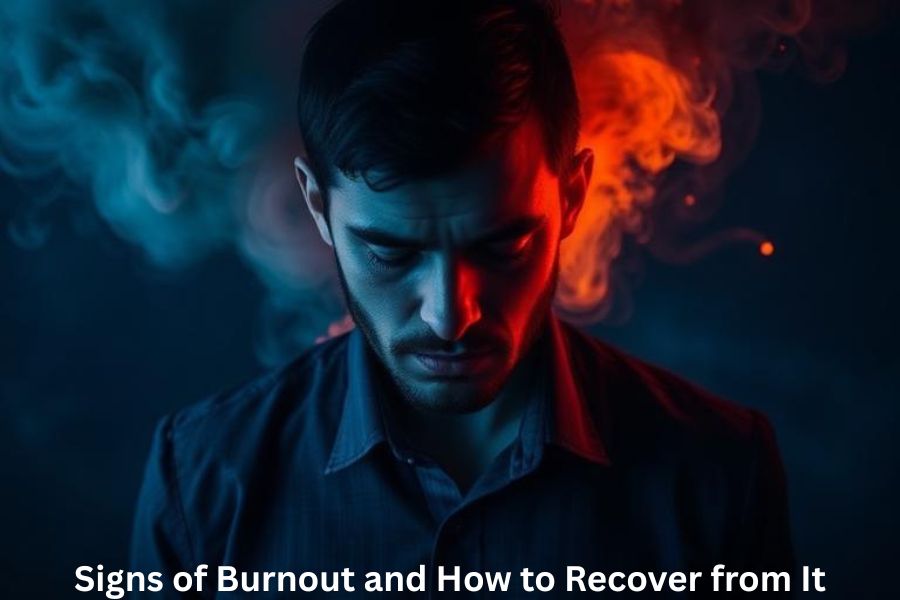
Burnout doesn’t crash into your life like a thunderstorm. It creeps in quietly—one late night, one skipped break, one “I’ll rest later” at a time. Before you know it, you’re running on empty, emotionally drained, and wondering why even simple tasks feel overwhelming. If that sounds familiar, you’re not broken—you’re burned out. Let’s talk about how to recognize the signs and, more importantly, how to recover.
Understanding Burnout
What Is Burnout?
Burnout is a state of chronic physical, emotional, and mental exhaustion caused by prolonged stress. It’s not just being tired—it’s feeling completely depleted, like your internal battery refuses to recharge.
Burnout vs Stress – What’s the Difference?
Stress feels like too much pressure. Burnout feels like nothing left to give. Stress says, “I have too much to do.” Burnout says, “I don’t care anymore.”
Why Burnout Is So Common Today
Hustle Culture and Constant Pressure
We’re praised for being busy and shamed for resting. That mindset turns exhaustion into a badge of honor.
Digital Overload and No Boundaries
Work emails, notifications, and messages never stop. When your brain never clocks out, recovery becomes impossible.
Emotional and Mental Fatigue
Caregiving, emotional labor, and constant decision-making quietly drain energy over time.
Early Warning Signs of Burnout
Constant Exhaustion
No amount of sleep feels like enough. You wake up tired and go to bed exhausted.
Loss of Motivation
Tasks that once felt manageable now feel heavy and pointless.
Increased Irritability
Small inconveniences feel huge. Your patience wears thin quickly.
Emotional Signs of Burnout
Feeling Detached or Numb
You feel disconnected from your work, relationships, and even yourself.
Anxiety and Low Mood
Burnout often brings persistent worry, sadness, or a sense of hopelessness.
Loss of Joy in Things You Once Loved
Hobbies feel like chores. Even fun feels exhausting.
Physical Signs of Burnout
Frequent Headaches and Body Aches
Stress lives in the body. Burnout often shows up as tension and pain.
Sleep Problems
Trouble falling asleep, staying asleep, or waking up feeling unrested.
Weakened Immune System
Getting sick more often is a common red flag.
Behavioral Signs of Burnout
Procrastination and Avoidance
You delay tasks because your energy and focus are depleted.
Withdrawal from Social Life
You cancel plans and isolate, not because you want to—but because you’re too drained.
Increased Reliance on Caffeine or Sugar
Quick energy fixes become survival tools.
How Burnout Affects Work and Relationships
Reduced Productivity
Working longer hours but getting less done is a classic burnout sign.
Emotional Distance from Others
Burnout builds walls, making connection feel like work.
The Hidden Dangers of Ignoring Burnout
Long-Term Mental Health Issues
Unchecked burnout can lead to anxiety disorders and depression.
Physical Health Consequences
Chronic stress increases the risk of heart disease, digestive issues, and hormonal imbalance.
How to Recover from Burnout
Step 1 – Acknowledge the Burnout
Denial delays healing. Naming burnout is the first act of recovery.
Step 2 – Rest Without Guilt
Rest isn’t lazy—it’s repair. Your nervous system needs it.
Step 3 – Rebuild Boundaries
Protect your time and energy like valuable currency.
Lifestyle Changes That Support Recovery
Improving Sleep and Nutrition
Prioritize regular sleep and nourishing meals. Recovery starts here.
Gentle Movement and Exercise
Walking, stretching, and yoga help without draining energy.
Reducing Screen Time
Less screen time gives your brain room to breathe.
Emotional Recovery Strategies
Talking It Out
Sharing your experience lightens the emotional load.
Practicing Self-Compassion
You’re not weak—you’re human.
Mental Reset Techniques
Mindfulness and Meditation
Even five minutes a day can calm an overworked mind.
Journaling and Reflection
Writing helps process emotions and regain clarity.
Returning to Work After Burnout
Adjusting Expectations
You don’t need to be “back to normal” overnight.
Preventing Relapse
Schedule rest before you feel exhausted—not after.
When to Seek Professional Help
Therapy and Counseling
A professional can help you unpack burnout safely and effectively.
Medical Support
Persistent symptoms may require medical attention.
Preventing Burnout in the Future
Sustainable Routines
Build a life that allows rest, not just productivity.
Saying No Without Guilt
Every “no” protects a future “yes” to yourself.
Conclusion
Burnout is your body and mind asking for change—not punishment. Recovery isn’t about pushing harder; it’s about slowing down, setting boundaries, and rebuilding from a place of compassion. Listen to the signals. Honor your limits. Healing is not only possible—it’s necessary.
FAQs
1. How long does burnout recovery take?
Recovery varies but often takes weeks to months, depending on severity.
2. Can burnout go away on its own?
Not usually. Active changes are needed to fully recover.
3. Is burnout a mental illness?
Burnout isn’t classified as a mental illness, but it can lead to one if ignored.
4. Can changing jobs cure burnout?
Sometimes, but burnout can follow if boundaries don’t change.
5. Is it okay to take time off for burnout?
Absolutely. Rest is part of recovery, not a failure.

Lookin’ for the latest ‘vn123 apk’. Anyone know if this is a safe download? Gotta protect my phone, you know? Hoping for good experiences here: vn123 apk
Yo, pincocasino2025 is on my radar. Futuristic name, right? Hoping their games are as cool as the website. Anyone tried their slots? Roll the dice: pincocasino2025
Just went through the 30jili login process. Was pretty smooth, I gotta say. Ready to start playing. Wish me luck everyone! Login here: 30jili login
I don’t think the title of your article matches the content lol. Just kidding, mainly because I had some doubts after reading the article. https://www.binance.com/register?ref=IXBIAFVY
Thanks for sharing. I read many of your blog posts, cool, your blog is very good. https://www.binance.com/register?ref=IXBIAFVY
Your point of view caught my eye and was very interesting. Thanks. I have a question for you.
Halfway through I knew I would finish the post, and a stop at firstisnotequallast also held me through to the end, content that signals its quality early and then sustains it is content with real internal consistency and this site has clearly figured out how to maintain quality from opening sentence through to closing thought.
I don’t think the title of your article matches the content lol. Just kidding, mainly because I had some doubts after reading the article. binance “oppna konto
Your article helped me a lot, is there any more related content? Thanks! https://www.binance.com/register?ref=QCGZMHR6
You could definitely see your expertise in the work you write. The world hopes for even more passionate writers like you who are not afraid to say how they believe. Always go after your heart.
I am lucky that I noticed this website, precisely the right info that I was searching for! .
You can certainly see your skills in the work you write. The world hopes for more passionate writers like you who are not afraid to say how they believe. Always follow your heart.
What i do not realize is actually how you’re not really much more well-liked than you might be right now. You’re so intelligent. You realize therefore significantly relating to this subject, produced me personally consider it from a lot of varied angles. Its like men and women aren’t fascinated unless it’s one thing to accomplish with Lady gaga! Your own stuffs outstanding. Always maintain it up!
I don’t even know how I ended up here, but I thought this post was great. I do not know who you are but definitely you’re going to a famous blogger if you are not already 😉 Cheers!
It’s really a great and useful piece of information. I’m glad that you simply shared this useful info with us. Please stay us informed like this. Thank you for sharing.
I enjoy, result in I found just what I was looking for. You’ve ended my four day long hunt! God Bless you man. Have a nice day. Bye
It’s best to take part in a contest for the most effective blogs on the web. I will suggest this website!
Rattling instructive and good body structure of written content, now that’s user friendly (:.
Thanks, I have recently been looking for info approximately this topic for a long time and yours is the best I have came upon so far. But, what concerning the conclusion? Are you sure in regards to the source?
What i do not understood is actually how you are no longer actually a lot more well-preferred than you may be right now. You’re very intelligent. You already know therefore considerably when it comes to this matter, made me individually imagine it from a lot of numerous angles. Its like women and men aren’t involved until it is one thing to do with Woman gaga! Your personal stuffs great. At all times handle it up!
Very interesting info !Perfect just what I was searching for! “The most wasted day of all is that on which we have not laughed.” by Sbastien-Roch Nicolas de Chamfort.
I gotta bookmark this internet site it seems invaluable handy
magnificent put up, very informative. I wonder why the opposite specialists of this sector don’t understand this. You must proceed your writing. I’m sure, you’ve a great readers’ base already!
Hello, Neat post. There’s an issue together with your web site in web explorer, could test this?K IE nonetheless is the market leader and a large part of people will omit your wonderful writing because of this problem.
Oh my goodness! an incredible article dude. Thank you However I am experiencing subject with ur rss . Don’t know why Unable to subscribe to it. Is there anyone getting an identical rss drawback? Anybody who knows kindly respond. Thnkx
You really make it seem so easy with your presentation but I find this matter to be actually something that I think I would never understand. It seems too complicated and extremely broad for me. I’m looking forward for your next post, I will try to get the hang of it!
I’ll right away grab your rss as I can’t to find your email subscription link or newsletter service. Do you’ve any? Please permit me know in order that I may subscribe. Thanks.
I don’t think the title of your article matches the content lol. Just kidding, mainly because I had some doubts after reading the article.
you are really a good webmaster. The web site loading speed is amazing. It seems that you’re doing any unique trick. Also, The contents are masterwork. you’ve done a great job on this topic!
Somebody necessarily assist to make significantly posts I would state. This is the very first time I frequented your website page and thus far? I surprised with the analysis you made to make this actual post amazing. Fantastic task!
Outstanding post, you have pointed out some great details , I besides conceive this s a very fantastic website.
I really enjoy studying on this site, it contains great blog posts.
I beloved up to you’ll receive carried out right here. The comic strip is tasteful, your authored material stylish. nevertheless, you command get bought an shakiness over that you would like be delivering the following. in poor health definitely come further until now again since exactly the same nearly a lot ceaselessly inside of case you shield this increase.
I also believe so , perfectly indited post! .
It is truly a great and useful piece of info. I’m glad that you simply shared this useful information with us. Please stay us informed like this. Thank you for sharing.
Hi are using WordPress for your blog platform? I’m new to the blog world but I’m trying to get started and create my own. Do you need any coding expertise to make your own blog? Any help would be greatly appreciated!
Howdy just wanted to give you a brief heads up and let you know a few of the images aren’t loading correctly. I’m not sure why but I think its a linking issue. I’ve tried it in two different web browsers and both show the same outcome.
Thank you for the sensible critique. Me & my neighbor were just preparing to do some research on this. We got a grab a book from our area library but I think I learned more clear from this post. I’m very glad to see such great info being shared freely out there.
Really enjoyed this article, can I set it up so I get an alert email when you make a new update?
I have been browsing online more than three hours these days, yet I never discovered any fascinating article like yours. It’s pretty value sufficient for me. In my opinion, if all webmasters and bloggers made excellent content material as you did, the web will likely be a lot more helpful than ever before. “Wherever they burn books, they will also, in the end, burn people.” by Heinrich Heine.
I’d always want to be update on new posts on this site, saved to bookmarks! .
Great post. I am facing a couple of these problems.
Hi! I’ve been reading your weblog for some time now and finally got the courage to go ahead and give you a shout out from Porter Tx! Just wanted to mention keep up the great job!
Greetings! This is my first visit to your blog! We are a group of volunteers and starting a new initiative in a community in the same niche. Your blog provided us beneficial information to work on. You have done a outstanding job!
I simply had to appreciate you all over again. I do not know the things that I could possibly have gone through in the absence of those hints revealed by you relating to such a area of interest. It actually was a very alarming issue in my circumstances, however , discovering a specialized form you handled that forced me to cry for gladness. I am happy for this service and thus pray you comprehend what an amazing job your are putting in instructing most people via your web blog. I am certain you haven’t encountered all of us.
Aw, this was a really nice post. In concept I want to put in writing like this moreover – taking time and precise effort to make an excellent article… but what can I say… I procrastinate alot and on no account appear to get something done.
I got good info from your blog
Hey very nice blog!! Man .. Excellent .. Wonderful .. I’ll bookmark your site and take the feeds also?KI am happy to search out a lot of helpful information right here within the put up, we’d like develop more techniques on this regard, thanks for sharing. . . . . .
Some really great info , Gladiola I discovered this. “Anonymity is the truest expression of altruism.” by Eric Gibson.
You need to participate in a contest for among the best blogs on the web. I’ll recommend this site!
I just could not go away your web site prior to suggesting that I actually enjoyed the usual information a person provide to your visitors? Is gonna be again often in order to investigate cross-check new posts
Outstanding post, you have pointed out some excellent details , I also conceive this s a very good website.
Really nice layout and superb subject material, nothing at all else we require :D.
Heya i am for the primary time here. I found this board and I find It really helpful & it helped me out a lot. I hope to provide something back and aid others like you helped me.
Admiring the commitment you put into your website and detailed information you present. It’s great to come across a blog every once in a while that isn’t the same unwanted rehashed information. Great read! I’ve bookmarked your site and I’m adding your RSS feeds to my Google account.
Admiring the hard work you put into your blog and detailed information you offer. It’s awesome to come across a blog every once in a while that isn’t the same unwanted rehashed information. Great read! I’ve bookmarked your site and I’m adding your RSS feeds to my Google account.
I reckon something truly interesting about your site so I saved to my bookmarks.
I like this weblog so much, saved to fav. “Nostalgia isn’t what it used to be.” by Peter De Vries.
I like what you guys are up too. Such intelligent work and reporting! Keep up the superb works guys I’ve incorporated you guys to my blogroll. I think it’ll improve the value of my site :).
I have read a few good stuff here. Definitely worth bookmarking for revisiting. I surprise how much effort you put to make such a fantastic informative website.
Fascinating blog! Is your theme custom made or did you download it from somewhere? A theme like yours with a few simple tweeks would really make my blog jump out. Please let me know where you got your design. With thanks
Would you be all for exchanging links?
Some genuinely interesting information, well written and loosely user genial.
가격을 비교할 때는 기본 요금뿐 아니라 주류·음료와 연장 비용이 포함되는지도 확인해야 합니다. 제주 가라오케 가격 확인 기준에 비용을 항목별로 확인하는 방법이 정리돼 있습니다.
Everything is very open and very clear explanation of issues. was truly information. Your website is very useful. Thanks for sharing.
Hi there! This is kind of off topic but I need some help from an established blog. Is it hard to set up your own blog? I’m not very techincal but I can figure things out pretty quick. I’m thinking about making my own but I’m not sure where to start. Do you have any tips or suggestions? Many thanks
I discovered your blog site on google and check a few of your early posts. Continue to keep up the very good operate. I just additional up your RSS feed to my MSN News Reader. Seeking forward to reading more from you later on!…
Very interesting topic, appreciate it for posting. “Integrate what you believe into every single area of your life.” by Meryl Streep.
I truly appreciate this post. I’ve been looking all over for this! Thank goodness I found it on Bing. You’ve made my day! Thank you again
An interesting discussion is worth comment. I think that you should write more on this topic, it might not be a taboo subject but generally people are not enough to speak on such topics. To the next. Cheers
I love your blog.. very nice colors & theme. Did you create this website yourself? Plz reply back as I’m looking to create my own blog and would like to know wheere u got this from. thanks
I’m truly enjoying the design and layout of your site. It’s a very easy on the eyes which makes it much more enjoyable for me to come here and visit more often. Did you hire out a developer to create your theme? Great work!
I have read a few good stuff here. Certainly worth bookmarking for revisiting. I surprise how much effort you put to create such a great informative website.
Hey There. I discovered your blog using msn. This is an extremely neatly written article. I will make sure to bookmark it and come back to learn extra of your helpful info. Thank you for the post. I will certainly comeback.
Would love to always get updated outstanding web site! .
I enjoy you because of each of your effort on this website. My mother loves participating in research and it’s really easy to see why. We all notice all about the lively way you give efficient tricks on your web site and in addition foster response from website visitors on that situation so our child is actually becoming educated so much. Enjoy the rest of the year. You are performing a splendid job.
I loved as much as you will obtain carried out right here. The cartoon is attractive, your authored material stylish. nonetheless, you command get bought an shakiness over that you want be delivering the following. unwell certainly come more before again since exactly the similar nearly very frequently inside case you defend this increase.
Super friendly community and a great selection of slots. I always have a blast whenever I log into idcipung138.
I truly enjoy examining on this site, it contains great articles. “Wealth and children are the adornment of life.” by Koran.
I was curious if you ever thought of changing the layout of your website? Its very well written; I love what youve got to say. But maybe you could a little more in the way of content so people could connect with it better. Youve got an awful lot of text for only having one or 2 pictures. Maybe you could space it out better?
I’ve been exploring for a little bit for any high quality articles or blog posts in this sort of house . Exploring in Yahoo I finally stumbled upon this website. Studying this information So i’m satisfied to express that I’ve an incredibly just right uncanny feeling I came upon exactly what I needed. I such a lot indubitably will make certain to don’t disregard this web site and provides it a glance regularly.
Hi there, I discovered your blog by means of Google at the same time as looking for a comparable matter, your website came up, it appears good. I’ve bookmarked it in my google bookmarks.
great issues altogether, you simply won a new reader. What might you recommend about your put up that you made some days ago? Any sure?
Thank you, I have recently been looking for information about this subject for ages and yours is the best I have discovered till now. But, what about the bottom line? Are you sure about the source?
Some really wonderful blog posts on this website, appreciate it for contribution. “Careful. We don’t want to learn from this.” by Bill Watterson.
Howdy very cool website!! Man .. Excellent .. Amazing .. I’ll bookmark your web site and take the feeds additionally?KI’m glad to find numerous helpful information right here within the publish, we need develop extra strategies on this regard, thank you for sharing. . . . . .
Woh I enjoy your posts, saved to my bookmarks! .
I love your blog.. very nice colors & theme. Did you make this website yourself or did you hire someone to do it for you? Plz reply as I’m looking to create my own blog and would like to find out where u got this from. kudos
But wanna input on few general things, The website design and style is perfect, the content material is really fantastic : D.
I like this site its a master peace ! Glad I found this on google .
My partner and I stumbled over here coming from a different web address and thought I might check things out. I like what I see so now i am following you. Look forward to looking at your web page repeatedly.
Its such as you learn my thoughts! You appear to know a lot about this, like you wrote the e-book in it or something. I feel that you could do with a few percent to power the message home a bit, but instead of that, that is wonderful blog. A fantastic read. I will certainly be back.
hi!,I love your writing so a lot! proportion we keep up a correspondence extra about your article on AOL? I need a specialist in this space to solve my problem. Maybe that’s you! Having a look forward to look you.
You have noted very interesting points! ps decent site.
Good write-up, I’m regular visitor of one’s web site, maintain up the excellent operate, and It’s going to be a regular visitor for a lengthy time.
I enjoyed reading something presented with such clarity.
great issues altogether, you simply gained a new reader. What could you suggest in regards to your publish that you just made a few days ago? Any positive?
I would like to thnkx for the efforts you have put in writing this blog. I am hoping the same high-grade blog post from you in the upcoming as well. In fact your creative writing abilities has inspired me to get my own blog now. Really the blogging is spreading its wings quickly. Your write up is a good example of it.
Menghargai kerja keras yang Anda curahkan ke situs Anda dan informasi terperinci yang Anda sajikan. Sangat hebat menemukan blog sesekali yang tidak berisi materi lama yang diulang-ulang. Artikel yang hebat! Saya sudah menandai situs Anda dan menambahkan feed RSS Anda ke akun Google saya.
Hi! I know this is kinda off topic but I was wondering if you knew where I could find a captcha plugin for my comment form? I’m using the same blog platform as yours and I’m having difficulty finding one? Thanks a lot!
Today, I went to the beachfront with my kids. I found a sea shell and gave it to my 4 year old daughter and said “You can hear the ocean if you put this to your ear.” She put the shell to her ear and screamed. There was a hermit crab inside and it pinched her ear. She never wants to go back! LoL I know this is totally off topic but I had to tell someone!
I see something truly special in this website .
Rattling clean site, thanks for this post.
Way cool, some valid points! I appreciate you making this article available, the rest of the site is also high quality. Have a fun.
Thanks for another magnificent article. Where else may anyone get that type of info in such an ideal approach of writing? I’ve a presentation subsequent week, and I am on the look for such information.
I think this website holds some very great info for everyone :D.
I appreciate that the discussion doesn’t jump straight into complex details but establishes a foundation first, making the subsequent sections easier to understand.
I really delighted to find this web site on bing, just what I was looking for : D besides bookmarked.
Rattling nice pattern and fantastic content, hardly anything else we need :D.
My partner and I stumbled over here different page and thought I should check things out. I like what I see so now i am following you. Look forward to checking out your web page for a second time.
You have remarked very interesting points! ps nice internet site. “‘Tis a sharp medicine, but it will cure all that ails you. — last words before his beheadding” by Sir Walter Raleigh.
Great post, I think blog owners should larn a lot from this web blog its rattling user pleasant.
Real superb information can be found on site.
But wanna remark on few general things, The website design and style is perfect, the written content is very superb : D.
I’d have to examine with you here. Which is not one thing I usually do! I take pleasure in reading a post that may make folks think. Additionally, thanks for permitting me to comment!
I wanted to thank you for this great read!! I definitely enjoying every little bit of it I have you bookmarked to check out new stuff you post…
Normally I do not read article on blogs, but I would like to say that this write-up very forced me to try and do so! Your writing style has been surprised me. Thanks, very nice article.
I went over this site and I conceive you have a lot of fantastic information, saved to bookmarks (:.
Hello! I could have sworn I’ve been to this blog before but after browsing through some of the post I realized it’s new to me. Anyways, I’m definitely happy I found it and I’ll be book-marking and checking back frequently!
Wow that was strange. I just wrote an extremely long comment but after I clicked submit my comment didn’t appear. Grrrr… well I’m not writing all that over again. Regardless, just wanted to say great blog!
Hello my friend! I wish to say that this post is amazing, nice written and come with almost all important infos. I would like to see extra posts like this.
Oh my goodness! an incredible article dude. Thanks Nevertheless I am experiencing subject with ur rss . Don’t know why Unable to subscribe to it. Is there anyone getting equivalent rss downside? Anyone who is aware of kindly respond. Thnkx
Greetings! I know this is kind of off topic but I was wondering if you knew where I could locate a captcha plugin for my comment form? I’m using the same blog platform as yours and I’m having difficulty finding one? Thanks a lot!
Hi, Neat post. There’s an issue along with your web site in web explorer, may check thisK IE nonetheless is the marketplace leader and a huge component of other people will pass over your fantastic writing due to this problem.
Great post but I was wanting to know if you could write a litte more on this topic? I’d be very grateful if you could elaborate a little bit more. Appreciate it!
Thank you for helping out, excellent info. “It does not do to dwell on dreams and forget to live.” by J. K. Rowling.
Some genuinely nice and useful info on this website, likewise I believe the design contains excellent features.
I used to be very pleased to search out this internet-site.I needed to thanks in your time for this wonderful read!! I positively having fun with every little bit of it and I’ve you bookmarked to check out new stuff you blog post.
I truly appreciate this post. I’ve been looking all over for this! Thank goodness I found it on Bing. You’ve made my day! Thank you again
I’ve tried a few sites this month but this one is definitely the smoothest. Fast payouts and the interface is super easy to navigate. Highly recommend pkbet2888 for anyone looking for a reliable spot.
I gotta favorite this site it seems invaluable very helpful
Saved as a favorite, I really like your blog!
hi!,I like your writing very much! share we communicate more about your article on AOL? I require an expert on this area to solve my problem. May be that’s you! Looking forward to see you.
Perfectly written written content, appreciate it for entropy.
Finally found a platform that doesn’t lag during peak hours. The login process is smooth and the interface is very user friendly. Give hoki69login a try if you want a hassle free game.
so much wonderful info on here, :D.
You have brought up a very fantastic details, thanks for the post.
Some really select posts on this website , saved to bookmarks.
Thank you for the auspicious writeup. It actually used to be a entertainment account it. Glance complicated to more brought agreeable from you! However, how can we be in contact?
I don’t think the title of your article matches the content lol. Just kidding, mainly because I had some doubts after reading the article.
hi!,I like your writing so much! share we communicate more about your article on AOL? I need an expert on this area to solve my problem. Maybe that’s you! Looking forward to see you.
My brother recommended I may like this web site. He was entirely right. This put up actually made my day. You can not imagine simply how a lot time I had spent for this info! Thanks!
Yes! Finally someone writes about dewapoker.
Also visit my blog post … daftar dewapoker
I have been absent for a while, but now I remember why I used to love this blog. Thanks , I will try and check back more frequently. How frequently you update your site?
I’m not sure why but this weblog is loading very slow for me. Is anyone else having this problem or is it a problem on my end? I’ll check back later and see if the problem still exists.
Would love to perpetually get updated great blog! .
I found your blog web site on google and verify a couple of of your early posts. Continue to maintain up the excellent operate. I simply further up your RSS feed to my MSN News Reader. Seeking forward to studying more from you in a while!…
I like what you guys are up too. Such intelligent work and reporting! Keep up the superb works guys I’ve incorporated you guys to my blogroll. I think it’ll improve the value of my website :).
Have you ever considered about including a little bit more than just
your articles? I mean, what you say is important and everything.
But think about if you added some great pictures or videos to give your posts more, “pop”!
Your content is excellent but with images and videos, this blog could definitely be one of the greatest in its niche.
Superb blog!
Also visit my page … login dewapoker
I truly enjoy reading through on this web site, it holds wonderful posts. “It is easy to be nice, even to an enemy – from lack of character.” by Dag Hammarskjld.
Some genuinely howling work on behalf of the owner of this site, utterly outstanding content.
I think this website has got some really superb information for everyone. “Variety is the soul of pleasure.” by Aphra Behn.
The subsequent time I learn a weblog, I hope that it doesnt disappoint me as a lot as this one. I mean, I know it was my choice to read, however I really thought youd have something attention-grabbing to say. All I hear is a bunch of whining about something that you could possibly fix if you happen to werent too busy in search of attention.
Yo, phl789 is where it’s at! Legit and pretty entertaining, I think i’ll be coming here for a while. Definitely check it out! phl789
Well I sincerely enjoyed reading it. This article procured by you is very effective for good planning.
Hi there! This post couldn’t be written any better! Reading through this post reminds me of my previous room mate! He always kept talking about this. I will forward this article to him. Pretty sure he will have a good read. Thank you for sharing!
Hi there, just changed into aware of your weblog through Google, and located that it’s truly informative. I’m gonna be careful for brussels. I will be grateful should you proceed this in future. Many people will be benefited out of your writing. Cheers!
My brother suggested I would possibly like this website. He was totally right. This publish actually made my day. You can not believe simply how a lot time I had spent for this information! Thank you!
Appreciate it for this post, I am a big big fan of this web site would like to proceed updated.
You made some clear points there. I did a search on the subject matter and found most guys will consent with your blog.
you’re really a good webmaster. The web site loading speed is amazing. It seems that you’re doing any unique trick. Moreover, The contents are masterwork. you have done a great job on this topic!
I was skeptical at first but the withdrawal process was seamless. Everything is handled professionally here at 991jilicom
Excellent read, I just passed this onto a colleague who was doing some research on that. And he actually bought me lunch because I found it for him smile Thus let me rephrase that: Thank you for lunch!
It is really a nice and useful piece of info. I am glad that you shared this useful info with us. Please keep us up to date like this. Thanks for sharing.
Please let me know if you’re looking for a article author for your weblog. You have some really good posts and I think I would be a good asset. If you ever want to take some of the load off, I’d absolutely love to write some material for your blog in exchange for a link back to mine. Please send me an email if interested. Thank you!
Just a smiling visitor here to share the love (:, btw great design.
Good post. I learn something more challenging on totally different blogs everyday. It’ll all the time be stimulating to learn content material from other writers and observe just a little something from their store. I’d desire to use some with the content on my weblog whether or not you don’t mind. Natually I’ll offer you a hyperlink in your net blog. Thanks for sharing.
certainly like your web-site but you need to check the spelling on several of your posts. A number of them are rife with spelling problems and I find it very troublesome to tell the truth nevertheless I’ll certainly come back again.
Keep up the superb piece of work, I read few posts on this site and I believe that your site is rattling interesting and has sets of great information.
시알리스의 성분인 타다라필과 효과, 지속시간, 5mg·10mg·20mg 차이를 알아보세요. 복용 방식, 부작용, 함께 복용하면 안 되는 약, 처방과 가격 확인 방법을 정리했습니다.
팔팔정의 성분과 효과, 50mg·100mg 차이, 복용 시간과 부작용을 확인하세요. 처방 및 가격 확인 방법, 함께 복용하면 안 되는 약, 자주 묻는 질문까지 안내합니다.
경기도 안양출장마사지 셀럽의 코스와 가격, 자택·호텔 방문 상담, 선입금 없는 예약 및 현장 결제 기준을 확인하세요. 방문 가능 여부와 예상 도착 시간은 주소와 당일 일정에 따라 안내합니다.
강릉출장안마로 장거리 출장이나 여행의 피로를 풀어보세요. 강릉 전 지역 어디든 찾아가는 전문 아로마 마사지·스포츠 마사지 서비스를 제공합니다. 비즈니스 출장객, 관광객, 강릉 지역 주민 모두 편리하게 이용할 수 있는 강릉출장안마 서비스입니다. 지금 문의하세요.
you are really a good webmaster. The web site loading speed is amazing. It seems that you are doing any unique trick. In addition, The contents are masterpiece. you’ve done a wonderful job on this topic!
인천출장마사지 인천출장안마 셀럽의 코스별 가격과 현장 결제, 예약 방법을 확인하세요. 송도·청라·부평·구월동·영종 등 지역별 방문 가능 여부와 예상 도착 시간, 자택·호텔 이용 안내를 제공합니다.
whoah this blog is magnificent i love reading your posts. Keep up the good work! You know, lots of people are hunting around for this information, you could aid them greatly.
제주출장마사지 셀럽의 코스와 가격, 방문 예약 방법을 확인하세요. 제주시·서귀포시·애월·중문 등 지역별 상담과 숙소 출입, 예상 도착 시간, 제주출장안마 현장 결제 기준을 안내합니다.
I like the valuable info you provide in your articles. I’ll bookmark your weblog and check again here frequently. I’m quite sure I’ll learn lots of new stuff right here! Good luck for the next!
We’re a bunch of volunteers and starting a brand new scheme in our community. Your website provided us with helpful information to paintings on. You’ve done a formidable job and our entire neighborhood will probably be grateful to you.
Admiring the persistence you put into your site and in depth information you provide. It’s great to come across a blog every once in a while that isn’t the same old rehashed information. Excellent read! I’ve bookmarked your site and I’m adding your RSS feeds to my Google account.
This is the right blog for anyone who wants to find out about this topic. You realize so much its almost hard to argue with you (not that I actually would want…HaHa). You definitely put a new spin on a topic thats been written about for years. Great stuff, just great!
Perfectly written subject material, Really enjoyed studying.
You could certainly see your enthusiasm in the paintings you write. The arena hopes for even more passionate writers such as you who aren’t afraid to mention how they believe. All the time go after your heart. “In order to preserve your self-respect, it is sometimes necessary to lie and cheat.” by Robert Byrne.
I’d always want to be update on new blog posts on this internet site, saved to favorites! .
Hello! I simply want to give an enormous thumbs up for the great information you’ve gotten here on this post. I will likely be coming back to your blog for extra soon.